
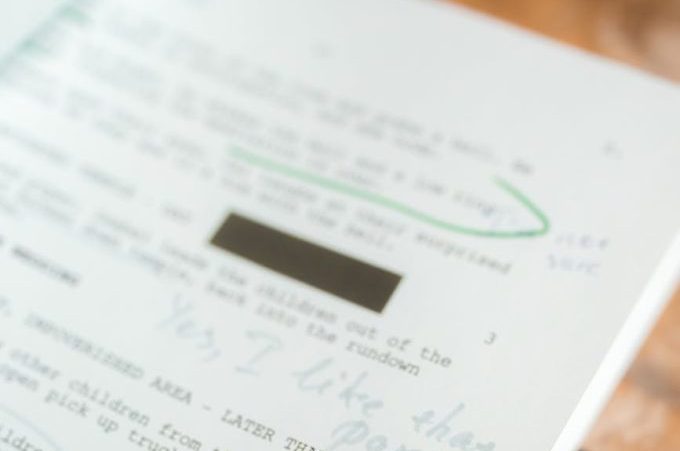
This is both a question I’ve been asked and an assumption I’ve encountered: with AI agents gaining the power of automated oversight and adaptive logic, no one needs a human editor anymore.
The honest truth? Depending on what you are looking for: No.
If you need someone to proofread or perform a Level 1 edit—fixing syntax and typos—your everyday AI assistant is more than sufficient. I would even argue that with their latest updates and their ability to self-correct, regulate tone, and analyze complex logic, AI can manage a decent Level 2 edit. They are excellent at ensuring a text is functionally connected and grammatically sound.
But good writing is more than a collection of perfect sentences*. It is an intentional structure built for a specific audience. And you need an editor’s nuanced skills to make sure the content stays the course.
Good writing is more than a collection of perfect sentences.
It is an intentional structure built for a specific audience.
Substantive editing, for example, doesn’t stop at just pattern recognition; it requires contextual and cultural intuition. The editor looks at the organization of ideas, the logic of the argument, and the pacing. Entire paragraphs move, and some sections get brutally cut if they don’t serve the goal. By the time you get to developmental editing, the editor turns almost into a visionary – complete with flowing robes and wild, silvered hair that flutters in the wind (just kidding, but see what I mean about contextual and cultural intuition?) – defining the voice, and ensuring the text aligns with the ultimate objective.
And all of this needs a human.
Also, let’s not forget that AI still hallucinates (even if they are getting better at grading their own homework and refining their voice), making it a very tricky thing to trust them with academic editing and fact checking. Its ability to copyedit and smoothen the text is actually a bit worrying in this context because when a text sounds smooth you tend to just go with it – there is no friction. This is dangerous when the purpose of the content is academic or technical, and accuracy is non-negotiable.
* This is the minimizing argument I have heard about editing nearly all my professional life from those who are not editors. I cannot say this enough and I know all my colleagues will agree: All good writing is error free but the opposite is far from true.
Leave a Reply